
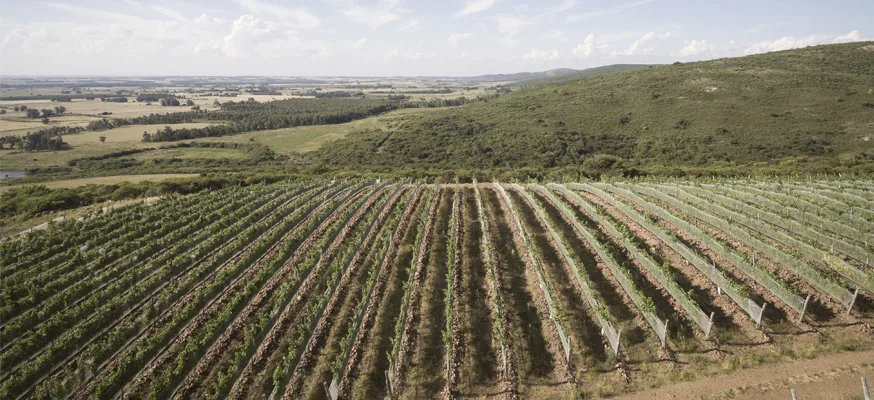
Winter alternated between warm and cold spells, with few hours below 10 °C and cumulative rainfall from April to August 42% above the recent average.
Budbreak came a week earlier than normal and was somewhat uneven at first, but over the following days it evened out and the growth cycle returned to normal, with no damaging frost or hail. In September and October rain was abundant and there were no limits on vegetative growth until flowering. From then on there was a clear break in the weather pattern: it began to rain less than normal, building up a water deficit that was very beneficial for grape quality and lasted until the last day of the harvest. Rainfall in November and December was 45% below normal, helping regulate vigor and keep the vines healthy. In January the water deficit continued, with 8% less rain than average, concentrated in a single event in mid-month. From then on, when most varieties begin to ripen, until the end of the harvest, there was not a single significant rainfall, consolidating the country’s most severe drought in recent years and creating optimal conditions for ripening. The harvest began on January 31 and ended on March 16. Thanks to this fantastic weather, practically every variety reached its best version: explosive aromas, high concentrations of sugar and color, ideal balance with acidity and optimal health, allowing us to bring out their full potential. Without a doubt, it is one of the best harvests in our history.