
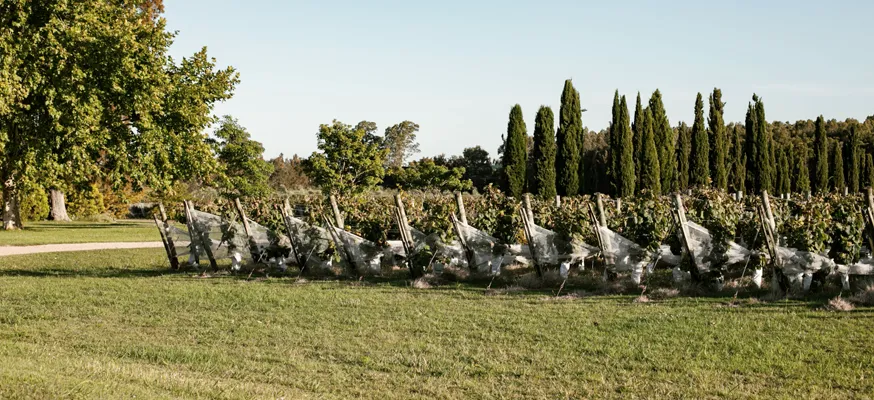
At the end of the 2009 harvest, the vineyard showed low vigor caused by the drought that had set in during spring 2008. In autumn and winter 2009, cumulative rainfall reached normal levels, which, together with a careful fertilization and vineyard management plan, restored the proper vegetative balance. Budbreak was about 7 days later than normal; during this stage rainfall was similar to the 20-year average but four times higher than the previous year. During flowering, rainfall was 40% above average, consolidating the vines’ recovery. Fruit set was very good in most varieties and final berry size reached normal averages.
Throughout berry development the water supply was above average, except in December, when it rained 35% less than normal.
Despite the wet conditions of this period, the vines’ health was very satisfactory. Overall, ripening began 10 days later than usual and progressed very slowly, both in the drop in acidity and in the accumulation of sugars and polyphenols. This only stretched out the harvest, since the grapes ripened fully. During these months, minimum, average and maximum temperatures were similar to the 20-year averages for the same period. The harvest began on February 8 with Sauvignon Blanc and ended (much later than usual) on April 9 with the Tannat and Merlot destined for our Cru d’Exception.
From mid-February until the end of the harvest there was practically no rain, which significantly improved quality, particularly for varieties such as Tannat, Petit Verdot and Marselan. The seeds ripened fully, with a great balance of concentration and elegance. The final result was exceptional: besides achieving high quality, we beat our all-time record with total production of 4,031 tons of grapes.